




Are Squirrels Dangerous? Disease Risk And Home Damage
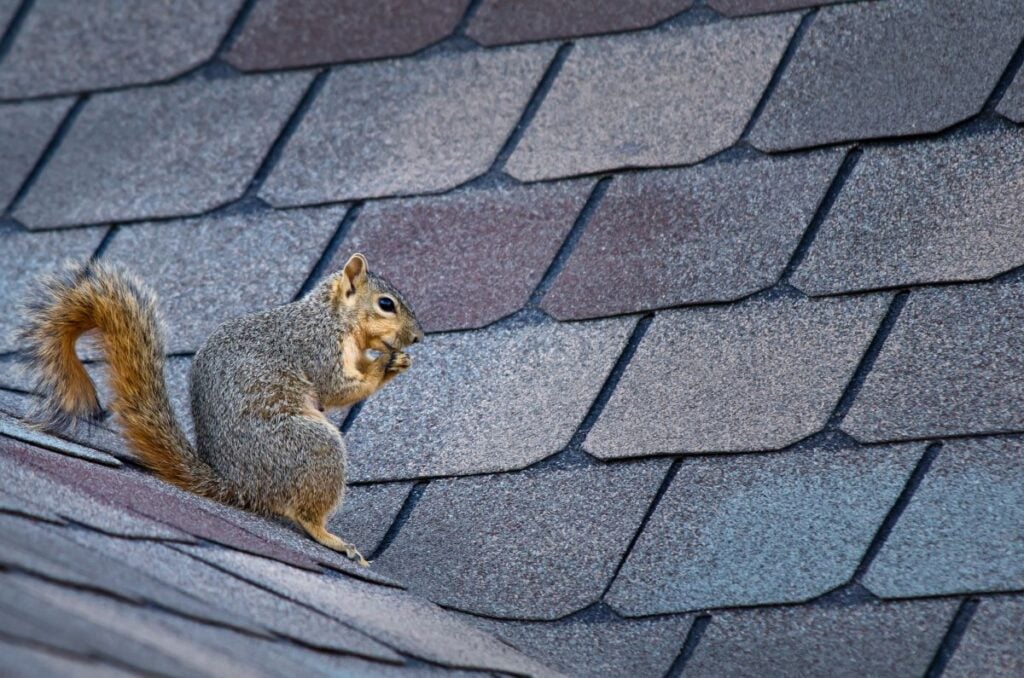
Many homeowners ask are squirrels dangerous when they start seeing frequent activity near their roofline, attic, or yard. While squirrels may appear harmless at first glance, they can pose real risks to both your health and your home when they get too close or move indoors. Understanding the true dangers associated with squirrels helps homeowners take appropriate action before small issues turn into serious problems.
- Health concerns: Squirrels can carry parasites and diseases.
- Property damage: Chewing and nesting cause costly repairs.
- Aggressive behavior: Squirrels may defend nests or babies.
If you are noticing persistent squirrel activity, this guide explains the real risks and what homeowners in Stevens Point, WI, and surrounding areas should know.
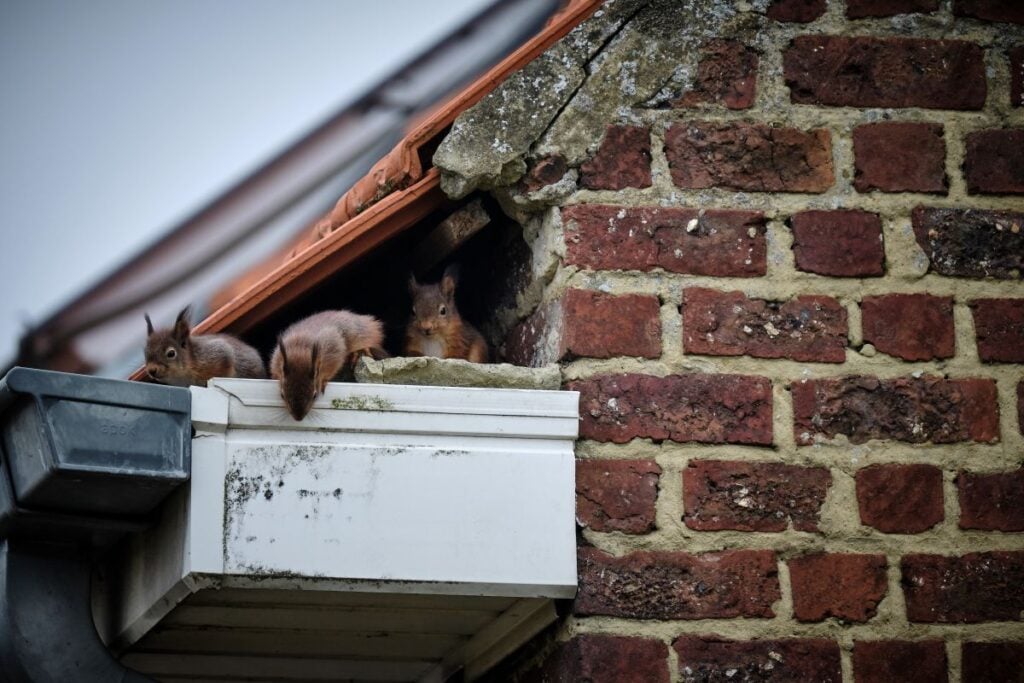
Why Squirrels Are Often Misunderstood
Squirrels are common in residential areas, which leads many people to assume they are harmless. Because they are active during the day and often seen in yards, they feel more familiar than other wildlife. This familiarity can cause homeowners to underestimate the risks they present.
When squirrels remain outdoors, they usually pose minimal danger. Problems arise when they enter homes, nest in attics, or interact closely with people and pets. At that point, both health and structural risks increase significantly.
Common Misconceptions About Squirrels
- They are friendly: Wild squirrels can bite or scratch when threatened.
- They stay outdoors: Many squirrels enter attics and walls.
- They are clean animals: Squirrels carry parasites and bacteria.
- They cause minor damage: Structural damage can be extensive.
Recognizing these misconceptions helps homeowners respond appropriately.
Disease Risks Associated With Squirrels
Although squirrels are not the most dangerous wildlife species, they can still carry diseases that pose risks to humans and pets. Direct contact, bites, scratches, or exposure to droppings increases the chance of disease transmission.
Squirrels also host parasites such as fleas and ticks, which can spread additional illnesses. These risks are higher when squirrels live inside attics or wall voids.
Diseases And Parasites Linked To Squirrels
- Leptospirosis: Spread through urine contamination.
- Salmonella: Transmitted through droppings.
- Tularemia: Rare but possible through bites or contact.
- Fleas and ticks: Can spread secondary diseases.
While disease transmission is uncommon, the risk increases with prolonged indoor exposure.
Can Squirrels Transmit Rabies?
Rabies is often one of the biggest concerns homeowners have about wildlife. While squirrels can technically contract rabies, documented cases are extremely rare. Public health agencies do not consider squirrels a primary rabies risk.
Even though rabies risk is low, any bite from a wild animal should be taken seriously. Avoiding direct contact is always the safest approach.
Rabies Risk Facts
- Extremely rare cases: Squirrels almost never test positive.
- Not rabies vectors: They do not spread rabies populations.
- Bite avoidance: Most squirrels flee rather than attack.
- Medical attention: Always seek care after a bite.
Rabies fears should not be the sole concern, but caution is still necessary.
How Squirrels Cause Damage To Homes
The most significant danger squirrels pose is damage to homes. Their constant chewing is necessary to keep their teeth from overgrowing, and homes provide many chewable materials. Once squirrels gain access, damage escalates quickly.
Attics, soffits, chimneys, and wall voids are especially vulnerable. Nesting squirrels often remain inside for months, compounding the damage.
Common Types Of Squirrel Damage
- Chewed wiring: Creates serious fire hazards.
- Roof damage: Holes in shingles, soffits, and fascia.
- Insulation destruction: Reduces energy efficiency.
- Structural weakening: Gnawed wood framing and supports.
These repairs can become costly if squirrels are not removed promptly.
5 Ways Squirrels Become Dangerous Inside Homes
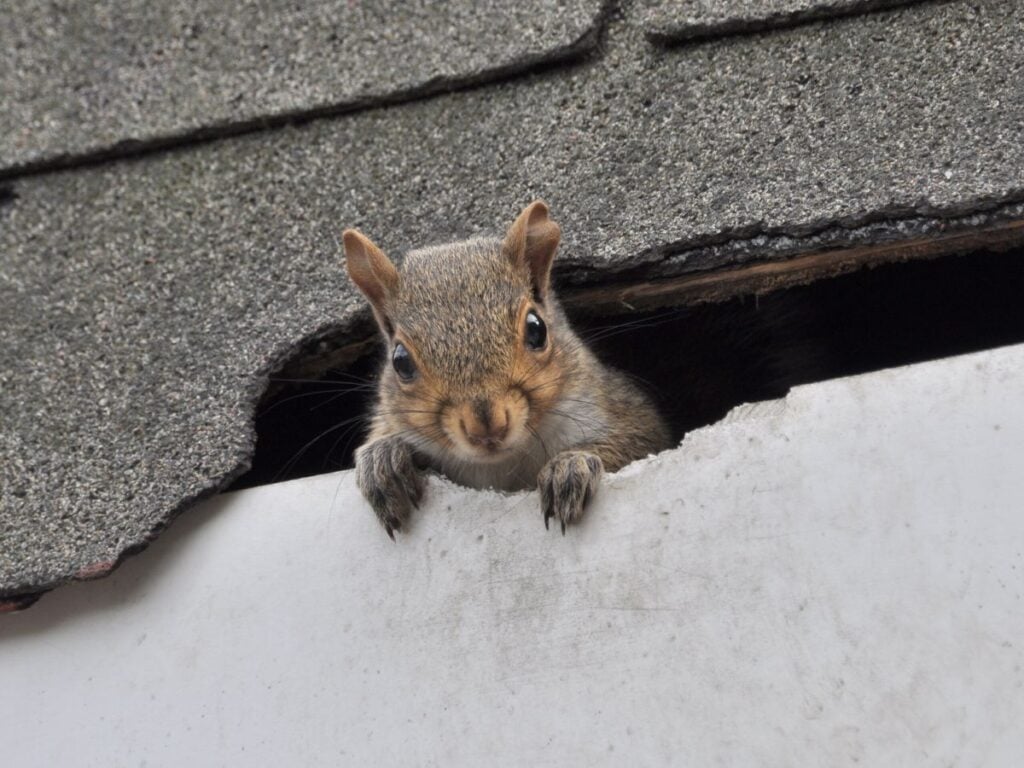
Squirrels are far more problematic once they move indoors. This section highlights the most serious risks homeowners face when squirrels invade living spaces.
- Fire Hazards From Chewed Wires: Squirrels frequently chew electrical wiring, which can spark fires inside walls or attics. This is one of the most dangerous consequences of indoor squirrel activity.
- Aggressive Behavior During Nesting: Mother squirrels defend their babies aggressively. Attempts to block entry points during baby season can lead to repeated damage or aggressive encounters.
- Structural Damage Over Time: Constant chewing and movement weaken wood, rooflines, and insulation. Damage worsens the longer squirrels remain inside.
- Parasite Infestations: Squirrels bring fleas, ticks, and mites indoors, which can spread to pets and humans. These secondary infestations often persist after squirrels are gone.
- Contamination From Droppings: Squirrel droppings contaminate insulation and air quality, increasing health risks and cleanup costs.
These dangers explain why indoor squirrel issues should never be ignored.
Signs Squirrels May Be Creating A Dangerous Situation
Recognizing warning signs early allows homeowners to act before risks escalate. Many of these signs appear well before visible damage is noticed.
Squirrel activity is often louder and more frequent during breeding seasons.
Warning Signs To Watch For
- Scratching or scurrying noises: Especially during daytime hours.
- Visible roof or soffit damage: Chew marks or holes.
- Frequent squirrel sightings: Repeated access to the same area.
- Strong odors: From nesting materials or droppings.
Any of these signs indicate a need for inspection.
Why DIY Removal Can Make Things Worse
Many homeowners attempt DIY squirrel removal, but this often leads to bigger problems. Blocking entry points without removing squirrels can trap animals inside, causing frantic damage.
Improper removal during baby season can result in dead animals inside walls, odor issues, and legal concerns. Professional handling ensures correct timing and humane removal.
Risks Of DIY Squirrel Removal
- Trapped babies: Leads to odor and contamination issues.
- Increased damage: Squirrels chew aggressively to regain access.
- Personal injury: Bites or falls during roof access.
- Repeat infestations: Entry points remain improperly sealed.
Professional help avoids these complications.
How To Reduce Squirrel Risks Around Your Home
Prevention is the most effective way to reduce squirrel-related dangers. Addressing access points and attractants early helps keep squirrels outside where they belong.
Consistent maintenance and inspections are especially important before breeding seasons.
Prevention Tips
- Seal roof gaps: Repair soffits, vents, and fascia boards.
- Trim trees: Keep branches away from roofs.
- Secure chimneys: Install chimney caps.
- Manage food sources: Limit bird feeders near the home.
These steps reduce both health and property risks.
When To Call A Professional
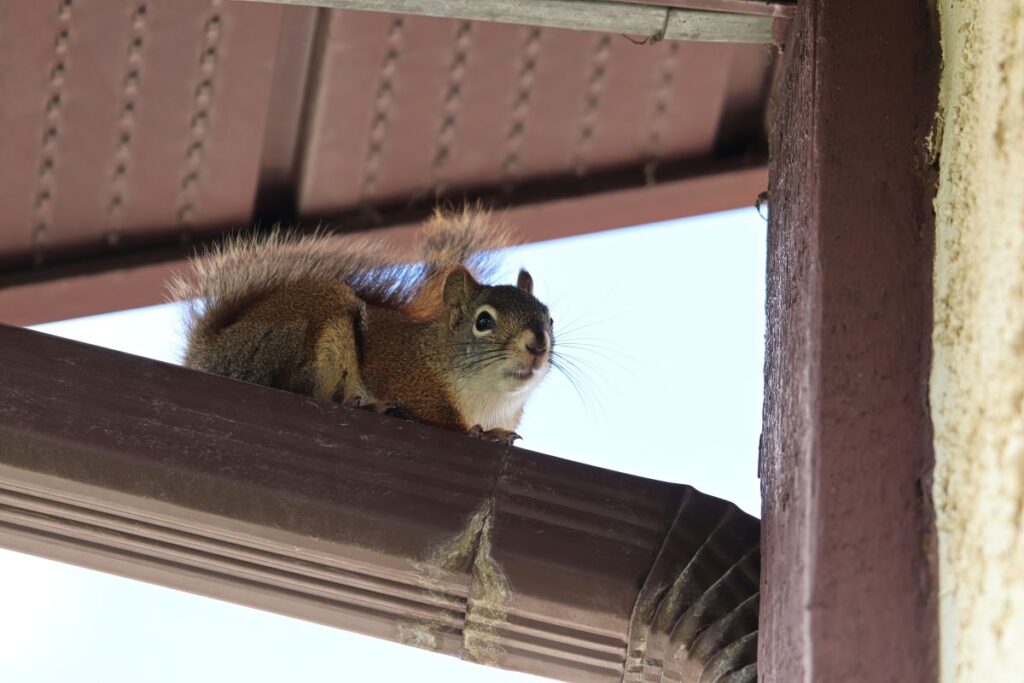
Squirrel issues that involve indoor activity, damage, or aggressive behavior should always be handled by professionals. Experts know how to assess risk, remove squirrels safely, and prevent future problems.
Professional services also ensure compliance with wildlife regulations and proper exclusion techniques.
Benefits Of Professional Squirrel Control
- Safe removal: Protects homeowners and animals.
- Damage repair: Addresses entry points and nesting damage.
- Health protection: Reduces disease and parasite risks.
- Long-term prevention: Stops repeat infestations.
Prompt Action Pest Control provides expert squirrel control services for homeowners in Stevens Point, WI, and surrounding areas.
Understanding The Real Danger Of Squirrels
Knowing the answer to are squirrels dangerous helps homeowners take squirrel activity seriously without unnecessary fear. While squirrels are not typically aggressive, their potential to cause disease exposure, fire hazards, and structural damage makes them a real concern when they enter homes.
If squirrels are damaging your property or posing risks to your family, contact Prompt Action Pest Control today. Our team in Stevens Point, WI, and surrounding areas will inspect your home, remove squirrels safely, and secure your property using proven, long-term solutions.
Recent Articles

Protect What Matters Most