




Spider Egg Sac Identification: 5 Different Types Explained

Understanding spider egg sac identification is an important step in controlling spider populations before they multiply inside your home. Egg sacs often go unnoticed because they are small, hidden, and easy to mistake for debris or dust. Knowing how to recognize different types of spider egg sacs helps homeowners take early action and prevent a larger infestation from developing.
- Hidden growth: Egg sacs can contain dozens or even hundreds of spiderlings.
- Early warning sign: Finding egg sacs often means adult spiders are present.
- Prevention opportunity: Removing sacs early limits population growth.
If you’ve noticed unusual sacs or webbing around your home, this guide explains what you may be seeing and what it means for homeowners in Green Bay, WI, and surrounding areas.
What Spider Egg Sacs Are And Why They Matter
Spider egg sacs are protective enclosures created by female spiders to safeguard their eggs. These sacs shield developing spiderlings from predators, moisture, and temperature changes. Depending on the species, a single egg sac can hold anywhere from a few dozen to several hundred eggs.
Because spiders often place egg sacs in quiet, undisturbed locations, infestations can grow unnoticed. Once eggs hatch, spider populations can increase rapidly, making early identification critical for effective control.

Why Egg Sacs Are A Serious Concern
- High hatch rate: Many eggs survive inside protected sacs.
- Rapid population growth: Spiderlings spread quickly once hatched.
- Hidden placement: Sacs are often tucked into corners or crevices.
- Recurring infestations: Adult spiders may lay multiple sacs each season.
Finding even one egg sac should prompt closer inspection of the surrounding area.
Where Spider Egg Sacs Are Commonly Found
Spiders prefer dark, quiet areas where egg sacs are unlikely to be disturbed. These locations often overlap with parts of the home that homeowners rarely inspect. Understanding where sacs are typically found helps you locate them early.
Egg sacs are usually attached to surfaces with silk and may blend into their surroundings. Some are hidden inside webs, while others are placed in cracks or corners.
Common Egg Sac Locations
- Basements and crawl spaces: Low traffic and low light areas.
- Attics: Undisturbed spaces ideal for egg development.
- Garages and sheds: Storage areas with limited movement.
- Window corners: Protected areas near insect activity.
Homes in Green Bay, WI, and surrounding areas often experience increased spider activity during warmer months when egg laying is most common.
Why Proper Identification Is Important
Not all spider egg sacs look the same. Different species create sacs that vary in size, color, texture, and placement. Correct identification helps determine how serious the issue may be and whether professional intervention is recommended.
Some spiders are harmless, while others may pose health concerns. Identifying egg sacs provides insight into which species may be present and how aggressively the infestation should be addressed.
Benefits Of Correct Identification
- Targeted control: Helps determine appropriate treatment methods.
- Risk awareness: Identifies potentially harmful spider species.
- Prevention planning: Guides long-term pest management strategies.
- Peace of mind: Reduces uncertainty about spider activity.
Accurate identification supports smarter, safer pest control decisions.
5 Common Types Of Spider Egg Sacs
This section explains five of the most commonly encountered spider egg sacs in residential settings. Each type has distinct characteristics that help homeowners recognize what they’re dealing with.
1. Common House Spider Egg Sacs
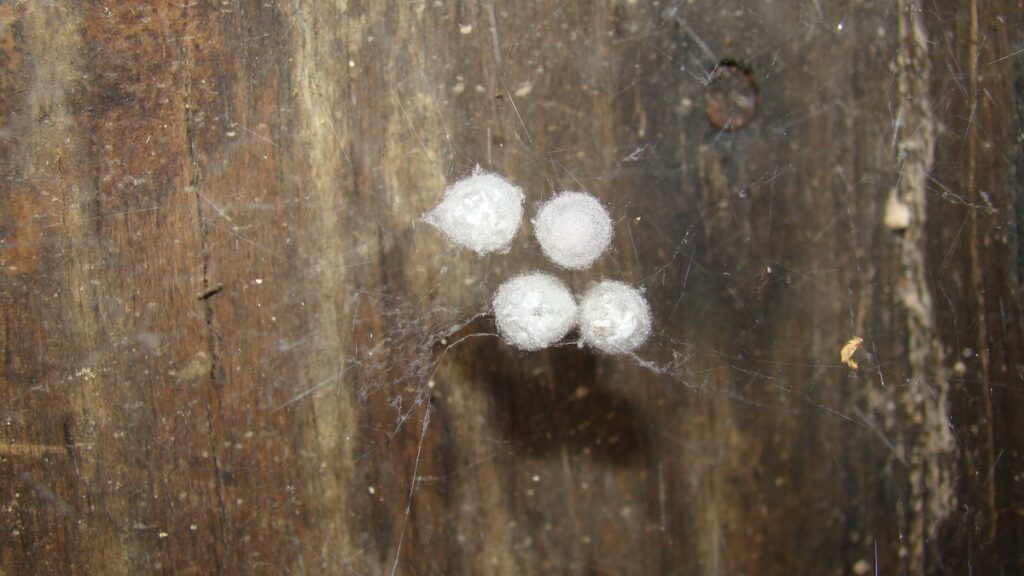
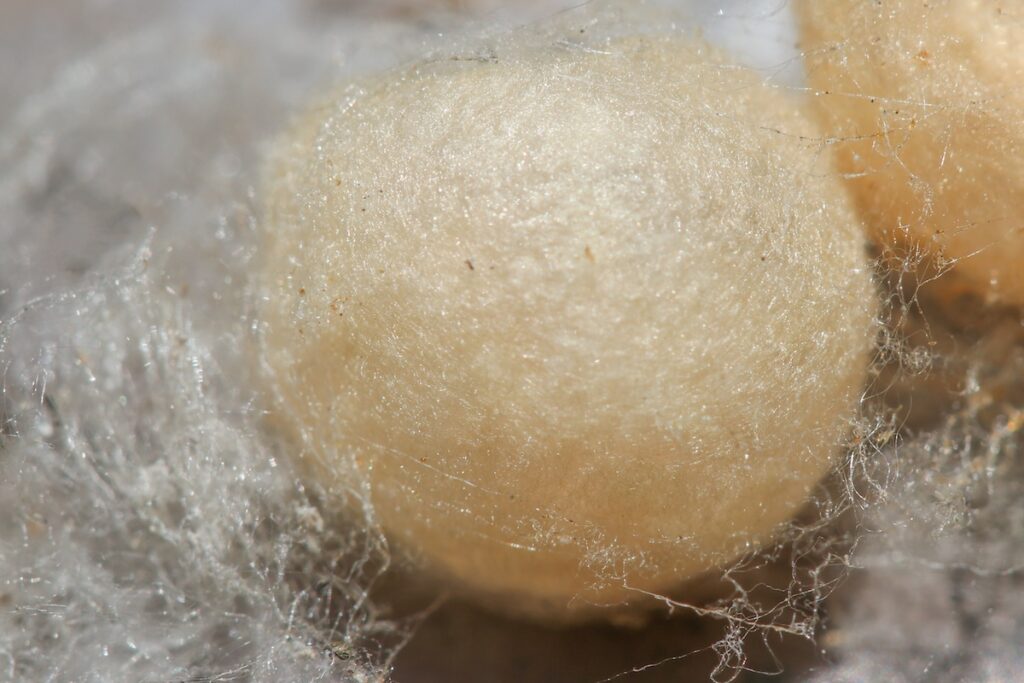
House spider egg sacs are small, round, and usually tan or light brown. They are often hidden in corners of ceilings, behind furniture, or in basements.
These sacs may contain dozens of eggs and are commonly found near irregular webs. House spiders frequently lay multiple sacs, which can lead to recurring infestations if not removed.
2. Wolf Spider Egg Sacs
Wolf spider egg sacs are larger and grayish in color. Unlike most spiders, wolf spiders carry their egg sacs attached to their bodies until hatching.
If you find a loose sac, it may indicate the spider has already released its spiderlings. Wolf spiders are active hunters and do not rely heavily on webs.
3. Brown Recluse Egg Sacs
Brown recluse egg sacs are small, off-white, and slightly flattened. They are often found in dark, undisturbed areas such as closets, basements, or storage boxes.
Because brown recluse spiders are medically significant, finding suspected egg sacs warrants immediate caution and professional evaluation.
4. Black Widow Egg Sacs
Black widow egg sacs are distinctive, smooth, and light beige to white. They are often pear-shaped and attached within messy, irregular webs.
Each sac can contain hundreds of eggs, making early removal extremely important. Black widows are venomous, and their presence should be taken seriously.
5. Cellar Spider Egg Sacs
Cellar spider egg sacs are loosely wrapped clusters of eggs rather than tightly sealed sacs. These spiders often hang upside down in webs and hold their eggs together with silk.
Cellar spiders commonly live in basements, crawl spaces, and corners of ceilings. While not dangerous, their populations can grow quickly if left unchecked.
Understanding these differences helps homeowners respond appropriately to spider activity.
What To Do If You Find Spider Egg Sacs
Finding an egg sac does not mean you need to panic, but it does require prompt action. Handling egg sacs incorrectly can release spiderlings into your home. Knowing how to respond safely reduces risk.
Egg sacs should never be crushed by hand or vacuumed without proper precautions. Improper removal can spread spiderlings throughout your living space.
Safe Steps To Take
- Avoid direct contact: Do not touch sacs with bare hands.
- Isolate the area: Prevent movement near the sac until removal.
- Use sealed disposal: Place sacs in airtight containers if removed.
- Schedule inspection: Have professionals assess surrounding areas.
Professional removal is often the safest option, especially for venomous species.
How Spider Egg Sacs Lead To Infestations
Egg sacs are a primary reason spider problems escalate quickly. Once spiderlings hatch, they disperse throughout the home in search of shelter and food. Many survive into adulthood if conditions are favorable.
Because spiders lay egg sacs in hidden areas, infestations often grow unnoticed. By the time spiders become visible, multiple sacs may already have hatched.
Factors That Encourage Growth
- Abundant insects: Food sources attract spiders.
- Undisturbed spaces: Quiet areas allow sacs to remain intact.
- Warm temperatures: Favor faster development and hatching.
- Unsealed entry points: Allow spiders to enter and reproduce indoors.
Removing egg sacs early disrupts this cycle.
How To Prevent Spider Egg Sacs In Your Home
Prevention focuses on reducing spider access, eliminating food sources, and maintaining your home. Small changes can significantly reduce the likelihood of egg sacs forming indoors.
Regular inspections help identify early signs before problems grow. Preventive strategies are most effective when applied consistently.
Preventive Measures
- Seal entry points: Close gaps around doors, windows, and vents.
- Reduce insects: Address other pest issues that attract spiders.
- Declutter storage areas: Remove hiding spots.
- Maintain lighting: Reduce exterior lighting that draws insects.
These steps help make your home less appealing to spiders.
When To Call A Professional
If you find multiple egg sacs or suspect a dangerous species, professional pest control is recommended. Experts can identify spider species accurately and remove egg sacs safely.
Professional inspections also address underlying conditions that allow spiders to thrive. This comprehensive approach prevents recurring infestations.
Benefits Of Professional Spider Control
- Accurate identification: Determines species and risk level.
- Safe removal: Prevents accidental release of spiderlings.
- Targeted treatment: Eliminates spiders and egg sacs effectively.
- Long-term prevention: Reduces future spider activity.
Prompt Action Pest Control provides expert spider inspection and treatment services for homeowners in Green Bay, WI, and surrounding areas.
Early Identification Makes A Big Difference
Spider egg sac identification helps homeowners stop spider infestations before they spread. Recognizing different types of egg sacs allows for quick, informed action that protects your home and family.
If you’ve found spider egg sacs or want to prevent spider problems before they grow, contact Prompt Action Pest Control today. Our team in Green Bay, WI, and surrounding areas will inspect your home, remove egg sacs safely, and implement proven solutions for lasting protection.
Recent Articles


Protect What Matters Most